


The oil and gas crisis triggered by Middle East tensions is reshaping global energy markets, exposing vulnerabilities while reinforcing the strategic role of renewables and storage.

The oil and gas crisis reshapes the pace of the global energy transition
Before the latest escalation in the Middle East, and before the conflict involving the United States, Israel, and Iran triggered a new oil and gas crisis, the global energy transition was already facing significant headwinds, particularly in Europe.
After years of rapid expansion, renewable energy growth slowed markedly in 2025. The sector faced a combination of structural challenges and short-term pressures, resulting in a decline in growth rates from +25% in 2024 to just +8% last year.
This slowdown did not significantly affect installed capacity or investment volumes, but it raised concerns about momentum. The key question now is whether, as seen during the 2021–2023 energy crisis, this new oil and gas crisis could ultimately accelerate the transition, and if so, how.
Fossil fuel price volatility exposes systemic risks
One fact is clear: the escalation of military operations in the Middle East pushed oil prices above $100 per barrel in just over a month, triggering widespread alarm across global markets.
At present, WTI crude futures have fallen below $99 per barrel, driven by expectations of de-escalation following statements by President Trump regarding a possible agreement with Tehran. Brent crude futures remain above $100 per barrel, while European natural gas prices have declined by more than 5% since late March, settling around €48 per MWh.
Despite this partial correction, markets remain highly volatile, and several countries, including those in Europe, are preparing contingency measures such as energy rationing.
At the same time, the oil and gas crisis has reignited calls from industry associations and advocacy groups to accelerate renewable deployment as a matter of energy security.
According to SolarPower Europe, the European Union saved €111.7 million per day during the first 17 days of the Iran conflict thanks to solar power. “The EU solar fleet generated 19.9 TWh of electricity in the first two and a half weeks of the war. Meeting this demand with gas-fired generation would have cost €1.9 billion, representing a 32% increase compared to the €6 billion spent on fossil fuel imports during the same period.“

Notably, European countries with higher levels of renewable deployment are proving more resilient in the current energy crisis.
How the oil and gas crisis disrupts clean energy supply chains
However, the oil and gas crisis also has direct implications for the energy transition, particularly through its impact on supply chains for critical materials.
The Middle East is a key hub for primary aluminum production, accounting for about 9% of global output. Ongoing disruptions have forced several producers to scale back or suspend operations. Analysts at Wood Mackenzie forecast a global supply deficit of 3 to 3.5 million tonnes by 2026, with prices potentially rising to around $3,500 per tonne.
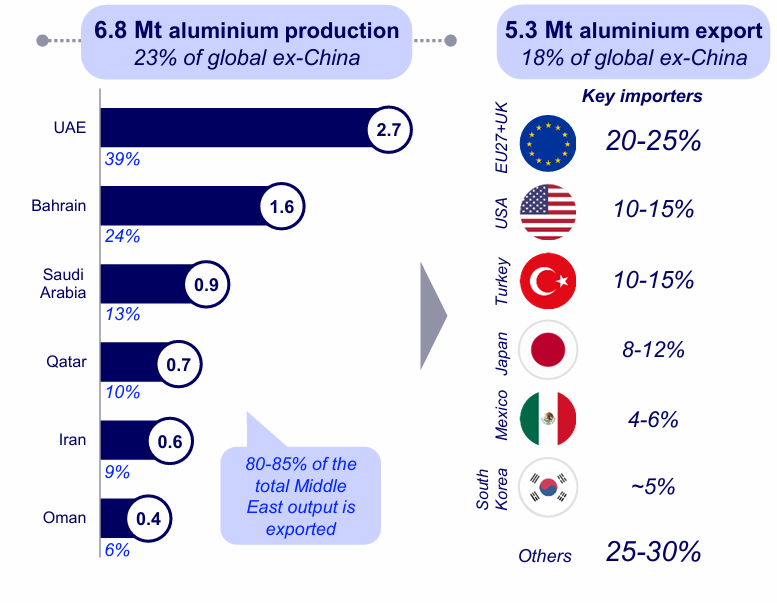
There are currently no viable short-term solutions to offset these disruptions. As a result, the cost of building new renewable capacity could increase, while inflationary pressures risk undermining investment conditions.
In parallel, some countries are responding to the energy crisis by temporarily reverting to coal. This trend is particularly visible in Asia, including India and Bangladesh, where coal-fired plants are operating at full capacity to compensate for shortages in liquefied natural gas. Italy has also approved an extension of its coal phase-out deadline to 2038.
Renewables and storage as strategic shields against the oil and gas crisis
Despite these challenges, renewable energy remains more cost-effective than fossil fuels and continues to represent the primary pathway for countries seeking energy sovereignty.
With adequate policy support, renewables could act as a structural hedge against the oil and gas crisis, reducing exposure to volatile global markets.
At the same time, a new strategic asset is gaining prominence: energy storage. Battery systems are increasingly seen as essential for both energy security and the broader energy transition.
“Battery storage stands out as the fastest and most effective solution to prevent expensive gas from setting electricity prices. This, in turn, makes electrification and flexibility more affordable for both industry and households,” SolarPower Europe noted.
Investment is expected to increasingly flow into storage technologies, not only in Western markets but globally. In a context marked by geopolitical instability, decentralized energy systems supported by batteries enhance infrastructure resilience and reduce vulnerability to disruptions, including physical attacks.


