Molten salt batteries: a strategic pathway for large-scale energy storage in Europe
ENEA has released the findings of the European research project SALTOpower, focused on the use of molten salt batteries for energy storage and system management. According to the agency, molten salt batteries represent a viable strategic alternative for energy storage in Europe, with strong potential to support renewable integration and reduce dependence on critical raw materials.
The study highlights how thermal storage systems can ensure grid flexibility, stability, and industrial autonomy. Research efforts are centered on integrating molten salt technologies into multifunctional energy hubs capable of managing electrical, thermal, and chemical energy flows.
Molten salt batteries and the 400 GWh target by 2030
Currently, Europe has around 77 GWh of installed storage capacity, covering only a limited share of future demand. In this context, molten salt batteries are positioned as a scalable and modular solution, suitable even for remote or isolated applications.
ENEA estimates that these systems could reach up to 400 GWh by 2030, significantly contributing to the continent’s storage capacity expansion.
Physical properties and industrial advantages of molten salt batteries
The use of molten salt batteries is based on materials such as nitrate salt mixtures, already widely used as fertilizers, which offer favorable technical characteristics for energy applications. These include high thermal stability, strong heat storage capacity, low vapor pressure, and wide operating temperature ranges.
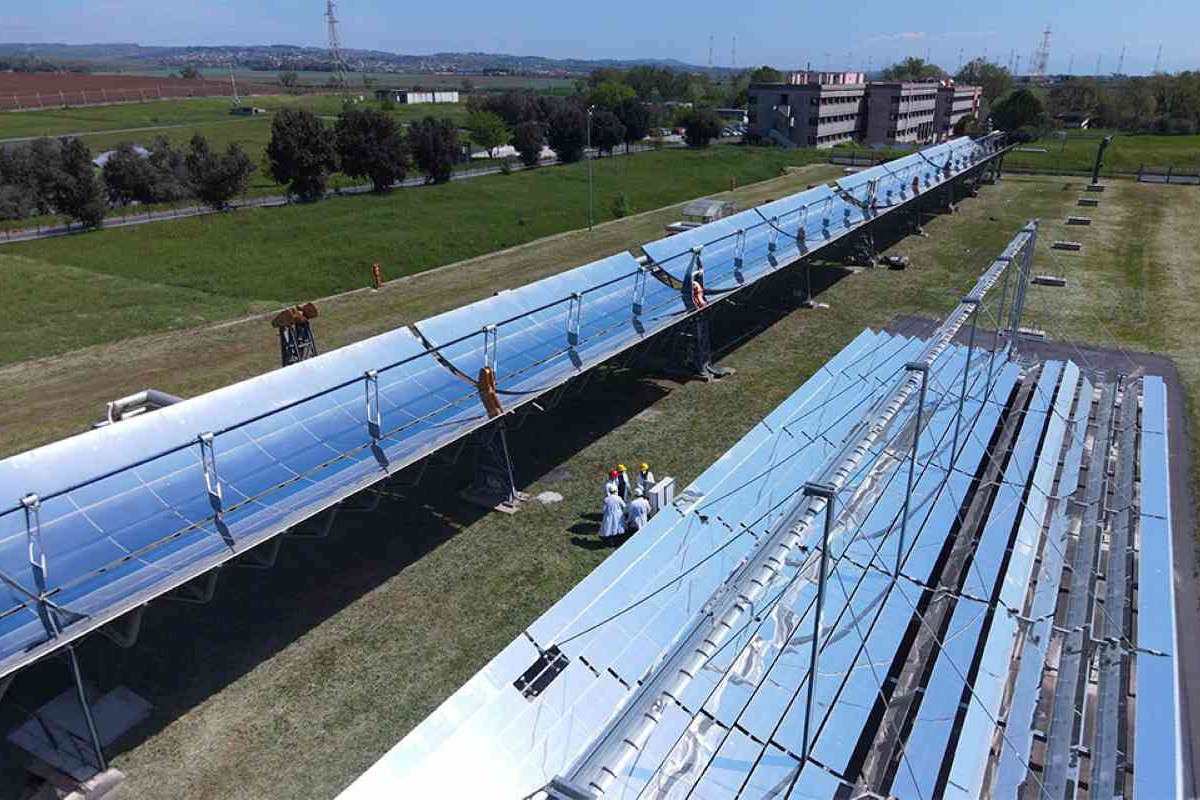
These properties explain why molten salts are already a standard in concentrated solar power plants. Their use allows energy to be stored during periods of excess generation and released when demand rises or production drops, ensuring dispatchable and programmable supply.
Another key advantage lies in raw material availability. Unlike lithium-ion batteries, whose supply chains are heavily concentrated in China, molten salt technologies rely on abundant or easily accessible materials in Europe, strengthening industrial autonomy.
Integrating molten salt batteries into energy systems
The integration of molten salt batteries into energy systems is a central focus of the SALTOpower project. Research is aimed at developing multifunctional energy hubs where electrical, thermal, and chemical energy are managed in a coordinated way.
These systems enable the interconnection of different energy networks and facilitate conversion between energy carriers. Technologies such as power-to-heat and heat-to-power allow electricity to be converted into heat and back again, while heat-to-gas and gas-to-heat processes further expand integration capabilities.
Thermal storage thus becomes a key enabler for increasing the penetration of non-dispatchable renewable sources such as wind and solar, while mitigating grid stability challenges.
Carnot batteries and advanced thermal storage applications
One of the most relevant applications studied in SALTOpower involves Carnot batteries. These systems use thermodynamic cycles to convert electricity into heat and then back into electricity, enabling flexible and high-capacity storage.
The research evaluates multiple technological solutions, including resistive heating and high-temperature heat pumps, alongside thermal conversion cycles. The goal is to assess both technical and economic performance, with a focus on grid integration.
In parallel, the project explores the production of renewable gases through thermo- and electrochemical processes, such as high-temperature electrolysis and biomass pyrolysis. These pathways enable the generation of hydrogen and syngas, expanding the role of molten salt batteries into the renewable fuels sector.
Toward a European research hub for molten salt batteries
A key strength of molten salt batteries is their scalability. Stored energy capacity can be increased simply by expanding tank volumes, without changing the fluid or core technology.
Over the past decade, European research has advanced significantly, with dedicated infrastructures developed in Germany, Italy, and Portugal. Notably, the construction of a pilot plant in Évora has strengthened testing and development capabilities for molten salt technologies.
SALTOpower aims to establish a European reference hub for research in this field, enhancing scientific, technical, and administrative expertise while fostering collaboration between institutions and industry.
Molten salt batteries and Europe’s energy security
Molten salt batteries could play a strategic role in ensuring energy security and system resilience. The use of locally available materials reduces reliance on external supply chains and strengthens Europe’s industrial competitiveness.
Moreover, the modular nature of these systems enables deployment in remote or isolated areas, helping address energy access challenges. This is particularly relevant for expanding renewable energy in non-interconnected regions or areas with limited infrastructure.