


Artificial intelligence is redefining road accident prevention by identifying high-risk drivers through behavioral, physiological, and psychological data before they even take the wheel.

AI-driven road accident prevention starts before driving begins
Predicting risk before it materializes is one of the most ambitious goals of artificial intelligence. In the field of road accident prevention, this vision is becoming tangible thanks to a new AI model developed by researchers at University of Sharjah.
The system is designed to assess the likelihood of accidents even before a driver starts the vehicle, marking a significant shift from reactive to predictive safety strategies.
Beyond experience: why traditional driver selection falls short
Most road accidents are still linked to human error. The study, published in Engineering Applications of Artificial Intelligence, introduces a more comprehensive approach by combining psychological profiling, physiological monitoring, and simulated driving performance.
Until now, sectors such as public transport and taxi services have relied mainly on past experience and driving records to select drivers. However, these criteria alone are increasingly insufficient to identify individuals who pose a real risk in today’s complex traffic environments.
Inside the experiment: how AI evaluates driver risk
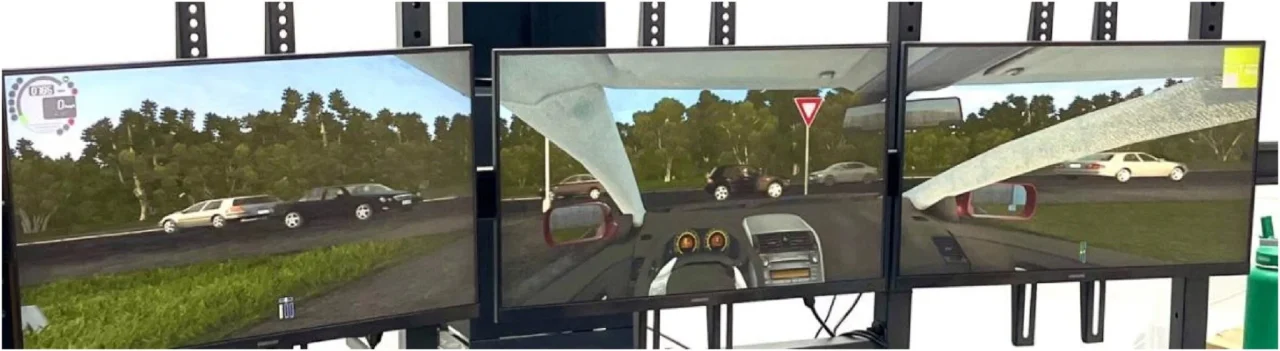
The research involved 80 participants, each tested during a 10-minute driving session in a simulator replicating urban traffic conditions in Dubai, a metropolis managing more than 3.5 million vehicles daily.
Participants first completed personality assessments measuring traits such as sensation seeking and conscientiousness. During the simulation, researchers monitored heart rate and eye movement indicators, including blinking frequency and gaze deviation.
“During the session, we recorded heart rate and detailed eye movement metrics,” explained Malek Masmoudi, lead author of the study. “Using machine learning models, we analyzed this integrated dataset to classify drivers as low or high risk based on objective outcomes such as collisions and traffic violations recorded in the simulation.”
Key findings: what makes a driver high-risk
Multiple machine learning models, combined with feature selection strategies, revealed clear correlations between driver traits and road behavior.
The AI system achieved high accuracy in classifying drivers into risk categories. Key predictors included:
- Gaze distraction
- Risk-taking tendencies
- Personal discipline
- Gender-related behavioral patterns
According to the study, individuals with strong discipline and responsibility tend to adopt safer driving behaviors. Conversely, those inclined toward thrill-seeking are significantly more likely to engage in dangerous actions and divert attention from the road, increasing collision risk.
Training, not just screening: a new tool for driver improvement
Beyond recruitment, the model can also function as a training tool. By identifying behavioral patterns, it enables drivers to better understand their own risk profiles and improve focus and self-control.
This dual application strengthens the role of road accident prevention not only as a selection mechanism but also as a continuous improvement process.
Personality and attention: the hidden factors in road safety
The study highlights a critical shift in perspective: road safety should not begin after an accident occurs, but before a driver is even hired.
“The safest accident is the one that never happens,” the researchers emphasize. Safety is deeply linked not only to technical driving skills but also to psychological traits. For instance, drivers who frequently divert their gaze from the road show a significantly higher probability of being involved in accidents.
A strategic opportunity for fleets and public safety
The practical implications of this technology are immediate, especially for taxi companies and commercial fleet operators.
Adopting AI-based road accident prevention systems could lead to:
- Fewer accidents and lower repair and insurance costs
- Increased passenger trust
- More targeted and effective training programs
However, as noted by Imad Alsyouf, AI should enhance rather than replace human judgment: “We are moving from intuition-based selection to safety decisions grounded in data.”
In the context of Industry 4.0, the real challenge is no longer technological but cultural. The tools to predict risk already exist. The next step is to integrate them into real-world decision-making processes.


