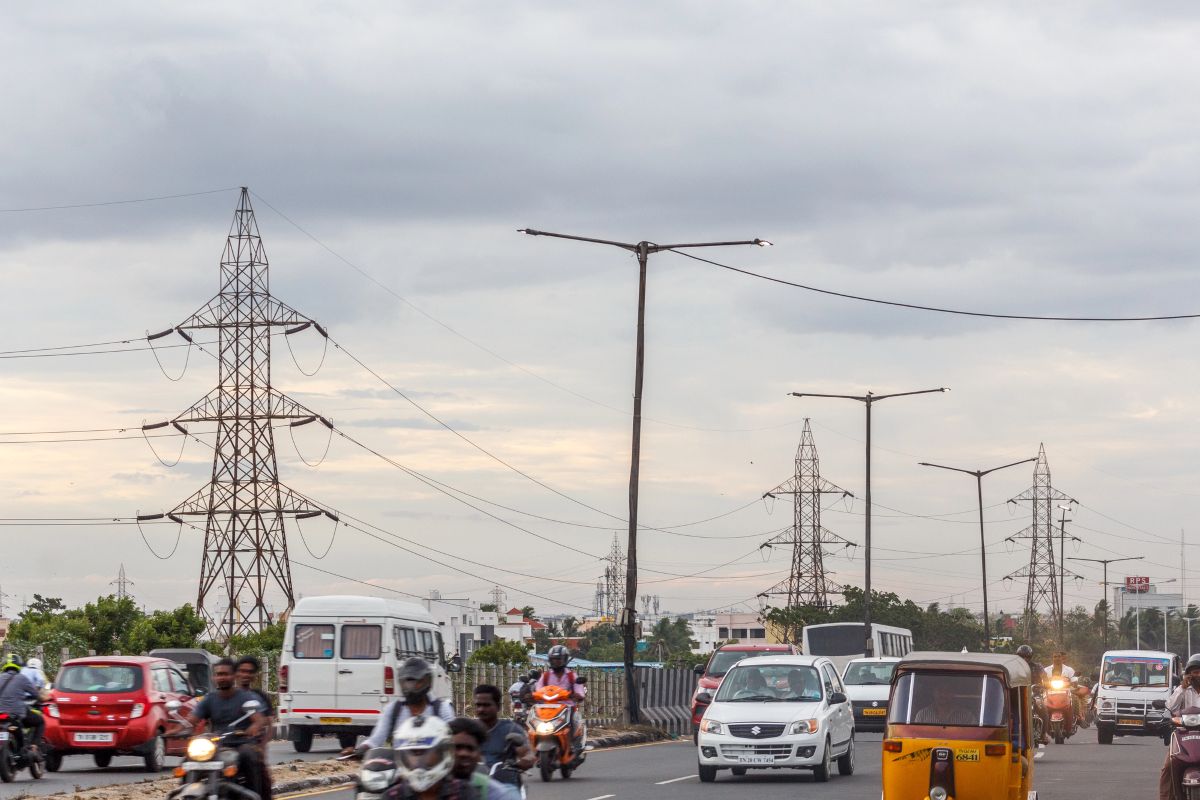
Grid delays prompt India to revise transmission charge rules
India’s power grid expansion is struggling to keep pace with the country’s rapid renewable energy rollout. The consequences are affecting not only operational power plants, which are increasingly facing renewable curtailment, but also projects under development that remain on hold because transmission infrastructure is not yet available.
To address the issue, the Central Electricity Regulatory Commission (CERC) has proposed reinstating specific exemptions from interstate transmission charges in India for eligible renewable energy projects. The measure is included in the fifth amendment to the 2020 Sharing of Interstate Transmission Charges and Losses Regulations, which has now entered the public consultation phase.
Under the proposal, projects delayed because the required transmission infrastructure is unavailable would qualify for exemptions from interstate transmission charges.
Transmission charges in India become a key issue for renewable growth
Like many fast-growing clean energy markets, India is expanding renewable generation more rapidly than its electricity network. According to a recent report by European think tank Ember, the country has achieved only about 80% of its annual transmission expansion targets over the past five years, allowing infrastructure backlogs to accumulate. India is estimated to require at least 61,411 km of additional transmission lines by fiscal year 2029-30.
Part of the delay stems from administrative procedures, right-of-way disputes and fragmented land ownership.
“The nature of renewable energy development in India further complicates the issue,” wrote Duttatreya Das, Energy Analyst at Ember. “Rajasthan, in the Northern Regional Grid, and Gujarat, in the Western Regional Grid, host most of the country’s utility-scale solar and wind capacity. This concentration, combined with delays in transmission and distribution infrastructure, is creating long queues at major pooling substations. On average, projects awaiting commissioning during fiscal year 2026-27 are experiencing grid connection delays of four to five months, while some substations in Rajasthan are reporting substantially longer waiting times.”
Between January and March 2026 alone, India was forced to curtail approximately 300 GWh of clean electricity because overloaded transmission networks could not accommodate all available renewable generation.
New exemptions for renewable energy projects
The proposed rules are designed to reduce financial pressure on developers. They apply to solar, wind and hybrid renewable energy projects that sign a Power Purchase Agreement (PPA), Power Sale Agreement (PSA), or any contract governed by the Indian Contracts Act by December 31, 2026, with a minimum contract duration of seven years.
The exemption would apply to projects whose scheduled grid connectivity date falls between July 1, 2025 and June 30, 2028, but whose connection is delayed because the transmission network is not ready.
To qualify, the project must achieve Commercial Operation Date (COD) within two months after transmission access becomes available. If this condition is met, the project will receive the transmission charge exemption corresponding to its original scheduled connectivity date, based on the graduated scale established by the regulator.
Battery storage projects receive longer incentives
For battery energy storage systems (BESS), which are already eligible for transmission charge exemptions, the proposal extends the exemption period from 12 years to 25 years, aligning it with the incentives available for solar and wind projects.
The draft regulation also introduces differentiated exemptions based on charging cycles. For example, a co-located BESS could receive a 100% exemption when charging directly from its associated renewable energy source, while benefiting from a graduated exemption when charging from the grid using electricity generated by other renewable sources.
In addition, electricity purchased through India’s Green Day Ahead Market (G-DAM) would count toward the minimum 51% renewable energy requirement needed to qualify for the exemption, provided that an official certificate confirms the electricity originated from solar or wind generation.