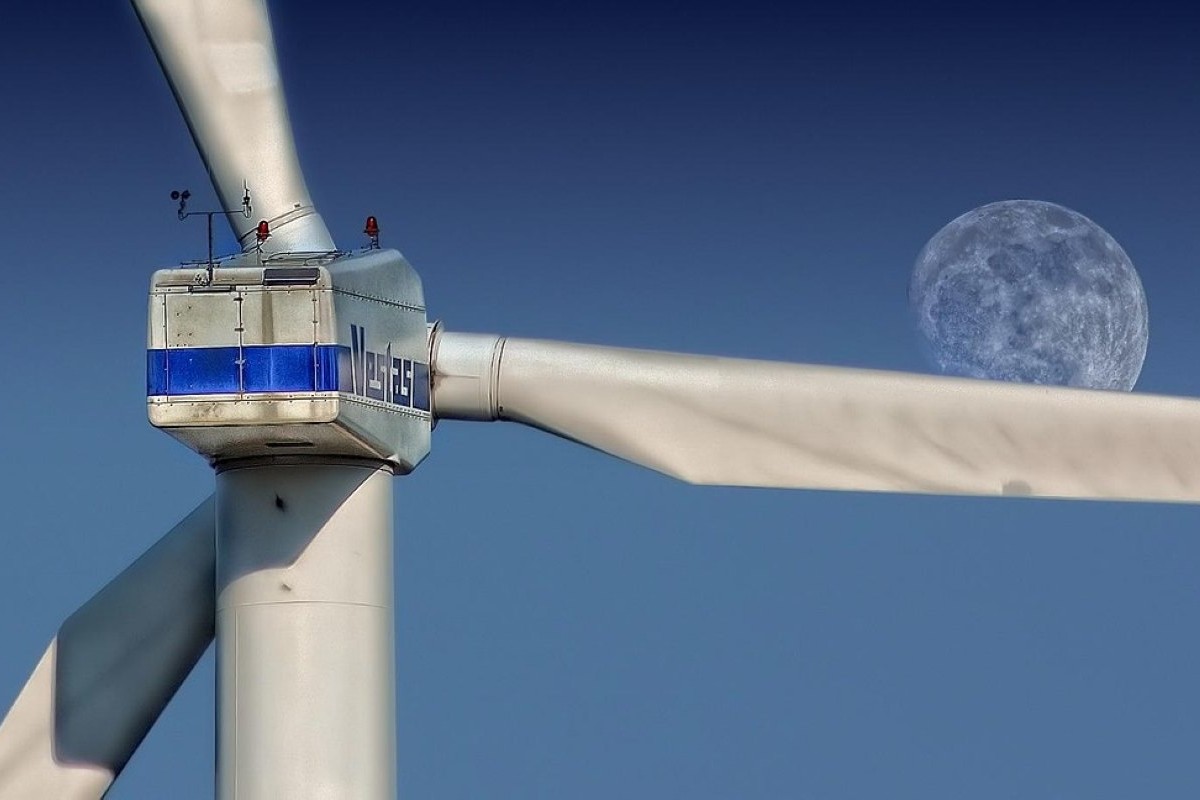
Wind energy worldwide reaches record growth in 2025
Amid a deep global energy transformation, wind energy worldwide hit a new all-time high in 2025, with 165 GW of new installed capacity, marking a 40% increase compared to the previous year. This is the highest figure ever recorded by the sector, confirmed by the latest Global Wind Report from the Global Wind Energy Council.
Total cumulative capacity has now reached 1,299 GW, spread across 138 countries using wind power to support their economies.
This growth comes at a time of continued volatility in fossil fuel markets. High oil and gas prices, combined with supply shocks, have strengthened the role of renewables. In this context, the wind sector demonstrates strong scalability and rapid expansion. The number of turbines installed reflects this trend, with 28,395 units deployed across 57 countries in 2025 alone.
“The strong increase we have seen in global wind installations sets a new benchmark for an industry that is rapidly accelerating,” said CEO Ben Backwell, highlighting the sector’s ability to meet demand for affordable and resilient energy.
Asia dominates with 80% of installations
The wind energy worldwide market remains heavily concentrated in Asia. In 2025, the Asia-Pacific region installed 131.8 GW, accounting for around 80% of global additions. China leads decisively, adding 120.5 GW in a single year and consolidating its leadership both in new installations and total capacity, which now stands at 640.5 GW.
India ranks third globally for new installations with 6.3 GW, recording an 86% increase compared to 2024. This growth reflects the country’s commitment to reaching 500 GW of non-fossil capacity by 2030.
Overall, the top five markets, China, United States, India, Germany, and Brazil, accounted for 86% of new installations and nearly 75% of total global capacity. This highlights a strong geographic concentration of investments and policy support.
Europe exceeds 300 GW but lags behind 2030 targets
In Europe, wind energy worldwide translates into more moderate yet still significant growth. In 2025, the continent installed 19.1 GW, up 16% year-on-year, bringing total capacity above 300 GW.
The EU-27 contributed 15.1 GW, a 17% increase, but still insufficient to meet the pace required for 2030 climate targets. Growth has been driven mainly by Germany and Turkey, while other markets have slowed due to complex permitting procedures and infrastructure constraints.
Expansion signals from the US and emerging markets
In the United States, onshore installations reached 6.9 GW, showing a strong rebound after years of stagnation. This confirms the sector’s economic resilience and the impact of supportive policies.
Africa and the Middle East also recorded a record year with 2.6 GW installed, driven by South Africa and unprecedented growth in Saudi Arabia. For African markets, this trend signals increasing relevance of wind in the energy mix, particularly in regions seeking energy security and diversification.
By contrast, Latin America experienced a slowdown, with 3.7 GW installed, affected by weak electricity demand and curtailment issues, particularly in Brazil.
Onshore dominates while offshore approaches 100 GW
Technology trends show that wind energy worldwide is still dominated by onshore installations. In 2025, 155.3 GW of onshore wind was installed, up 42%, compared to 9.3 GW offshore, which grew by 16%.
Despite the gap, offshore wind is approaching a symbolic milestone. Total offshore capacity reached 92.3 GW, nearing the global threshold of 100 GW. China contributed 6.6 GW, while Europe installed around 2 GW, led by the United Kingdom.
However, warning signs are emerging. In 2025, only 11.4 GW of new offshore capacity was awarded, below the 2024 record. The decline is linked to failed auctions in Europe, project cancellations in the United States, and changes in support mechanisms in China.
Structural barriers still slow deployment
Despite strong growth, wind energy worldwide continues to face significant barriers. Bureaucracy and slow grid development remain the main obstacles to project delivery.
“Bureaucratic red tape and slow roll-out of grids is stopping badly needed projects from being built,” Backwell noted. The issue is not a lack of projects or capital, but the capacity of permitting systems and infrastructure to keep pace with the energy transition.
To address these challenges, the sector calls for urgent action, including faster permitting processes, grid expansion, capital mobilization, and stronger industrial supply chains.
Toward 2 terawatts of wind energy worldwide by 2030
Forecasts suggest that wind energy worldwide will continue to expand in the coming years. Between 2026 and 2030, an additional 969 GW is expected to be installed, with an annual average of 194 GW and a compound growth rate of 5.2%.
At this pace, global capacity could surpass 2 terawatts by 2029, just six years after reaching the first terawatt in 2023. In the short term, China will continue to dominate, accounting for around 63% of new installations in 2026, but a gradual geographic diversification is expected.
From 2027 onward, regions such as Southeast Asia, Central Asia, Africa, and the Middle East are set to play an increasing role, contributing over 50% of global growth outside China by the end of the decade.
“A remarkable 40% growth across 138 countries shows the acceleration of wind power in the global energy transition,” said Girish Tanti, Vice Chairman of the Global Wind Energy Council, underlining wind energy’s strategic role in energy security and price stability.