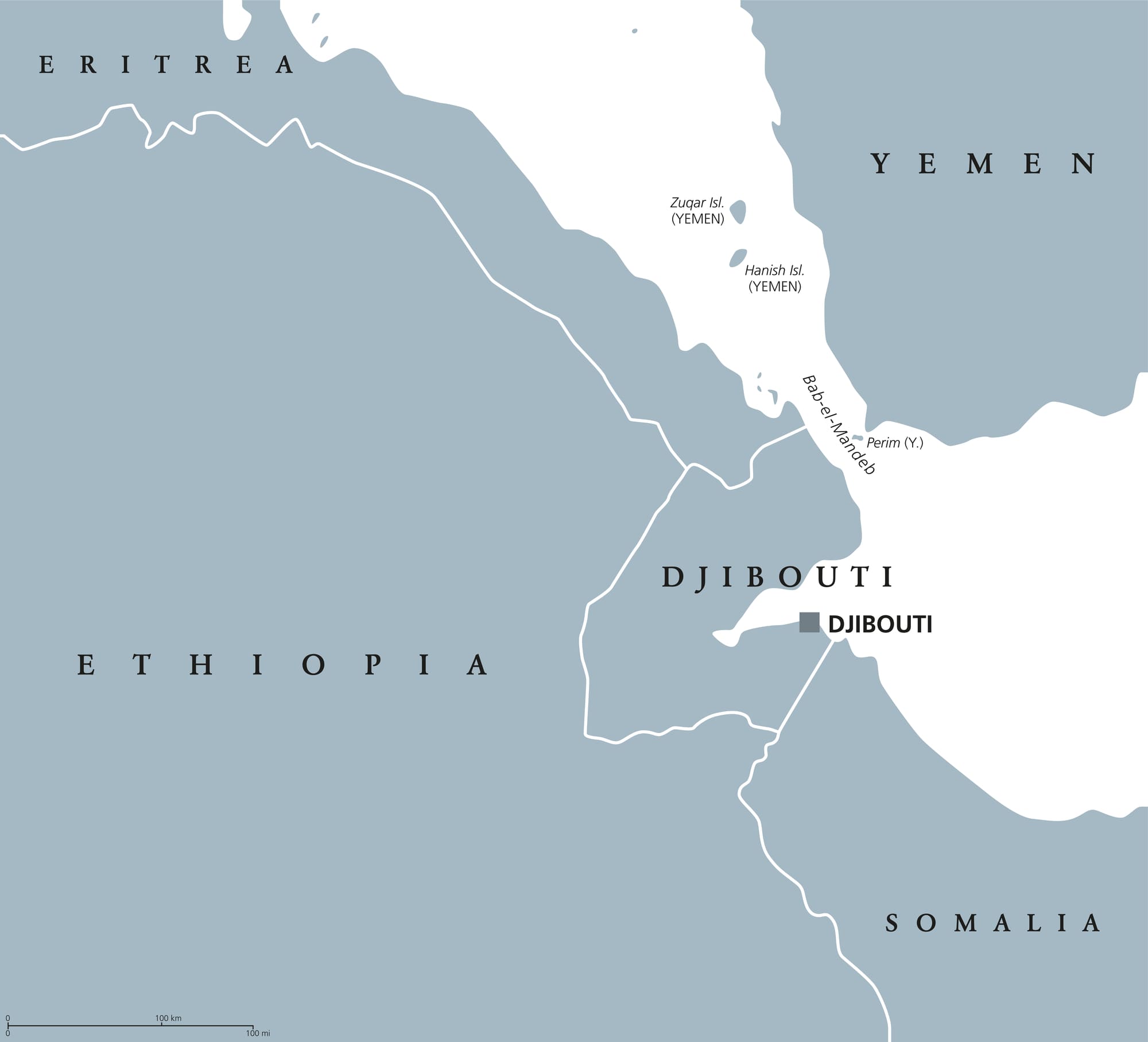
The risk of a Bab el-Mandeb Strait closure is rising
Since the outbreak of the war involving Iran, concerns over a possible closure of the Bab el-Mandeb Strait have returned to the forefront. The waterway currently carries nearly 12% of global maritime trade, 6% of the world’s oil shipments and 8% of global LNG and natural gas trade.
The scenario now appears increasingly plausible. A single move by the Iran-backed Houthi movement in Yemen could trigger an oil supply shock even more severe than the disruption already experienced in recent months. Such a development would effectively block Saudi Arabia’s main alternative export route, removing millions of additional barrels of crude oil from global markets every day.
Recent tensions between the United States, Iran and Israel, together with the lack of progress toward a diplomatic settlement, have once again highlighted the fragility of global energy supply chains. Mojtaba Khamenei, a senior adviser to Iran’s Supreme Leader, recently reiterated that Tehran’s regional allies are prepared to close the Bab el-Mandeb maritime corridor at any time, just as Iran has effectively done in the Strait of Hormuz.
Only days after the conflict between the United States, Israel and Iran escalated, Tehran effectively denied access through Hormuz to vessels from several countries. On April 13, the United States launched a naval blockade targeting Iranian ports, further reducing maritime traffic through the region. Should Bab el-Mandeb also become inaccessible, the conflict’s impact on global energy supplies could intensify significantly, increasing economic losses worldwide.
Bab el-Mandeb Strait and its importance for the energy sector
The Bab el-Mandeb Strait connects the Red Sea with the Indian Ocean through the Gulf of Aden. At its narrowest point it is just 29 kilometres wide and is effectively controlled by the Iran-backed Houthi movement.
The strait plays a critical role in Saudi Arabia’s energy export strategy, particularly for crude shipments destined for Asian markets. When Hormuz remains operational, Bab el-Mandeb also serves as a vital route for other Gulf producers exporting oil and gas to Europe through the Suez Canal or Egypt’s SUMED pipeline, which links the Red Sea to the Mediterranean.
Oil flows through Bab el-Mandeb averaged around 4.0 million barrels per day up to August 2024, down from an average of 8.7 million barrels per day throughout 2023. If both Bab el-Mandeb and Hormuz were closed simultaneously, roughly 25% of global oil and gas supply would be disrupted.
Bab el-Mandeb has become even more strategic after the closure of Hormuz
The effective closure of Hormuz has significantly increased the strategic value of Bab el-Mandeb. Saudi Arabia has increasingly relied on its Red Sea export terminal at Yanbu, using the East-West Crude Oil Pipeline to move crude from Abqaiq, near the Gulf, across the kingdom.
The 1,200-kilometre pipeline, operated by Aramco, transported an average of 770,000 barrels per day to the Red Sea coast in January and February, according to consultancy Kpler. By the end of March, following the closure of Hormuz and attacks affecting regional energy infrastructure, Saudi authorities reported that the pipeline was operating at its maximum capacity of 7 million barrels per day, the highest utilisation on record.
During the Israel-Gaza war, the Houthis disrupted traffic through Bab el-Mandeb by targeting vessels they considered linked to Israel or the United States. A ceasefire agreed between Washington and the Houthis in May 2025 led to the reopening of the shipping lane.
Although the group has largely stayed out of the latest hostilities since late February 2026, even attacks against a handful of oil tankers off Yemen’s coast could sharply reduce commercial traffic through Bab el-Mandeb, disrupting Saudi Arabia’s oil exports.
How likely is a Bab el-Mandeb Strait closure?
“At present, the likelihood of a complete and prolonged closure of the Bab el-Mandeb Strait remains relatively low because of the extensive international naval presence and the shared interest of many countries, including strategic rivals, in keeping the route open,” says Beniamino Franceschini, a geopolitics lecturer at SSML Pisa and Vice President of Il Caffè Geopolitico.
“There is, however, a growing probability of localised incidents and selective disruptions. Individual missile launches, suspicious vessel movements or identification errors could slow maritime traffic or encourage shipping companies to reroute vessels because of insurance concerns.”
Regional instability represents an additional source of risk. Somalia has remained politically unstable for almost four decades, while piracy and jihadist activity continue to threaten maritime security around Bab el-Mandeb. These dynamics raise the possibility of cooperation between Somali armed groups and the Houthi movement in Yemen.
“Looking at the broader geopolitical picture,” Franceschini continues, “there are terrorist organisations such as al-Shabaab and, to a much lesser extent, Islamic State affiliates operating in Somalia. Relations between al-Shabaab and the Yemeni Houthis have strengthened in recent months, making coordinated pressure on the Strait a realistic possibility.”
“Piracy is another important risk factor. It is largely opportunistic and not always linked to terrorism, but incidents have been increasing again after several quieter years. Somalia’s federal government continues to struggle to control its territory because of jihadist groups and regional autonomy movements, relying heavily on international support from countries such as Türkiye and Egypt. At the same time, the country’s political transition remains incomplete, with renewed tensions emerging between the President and opposition forces.“