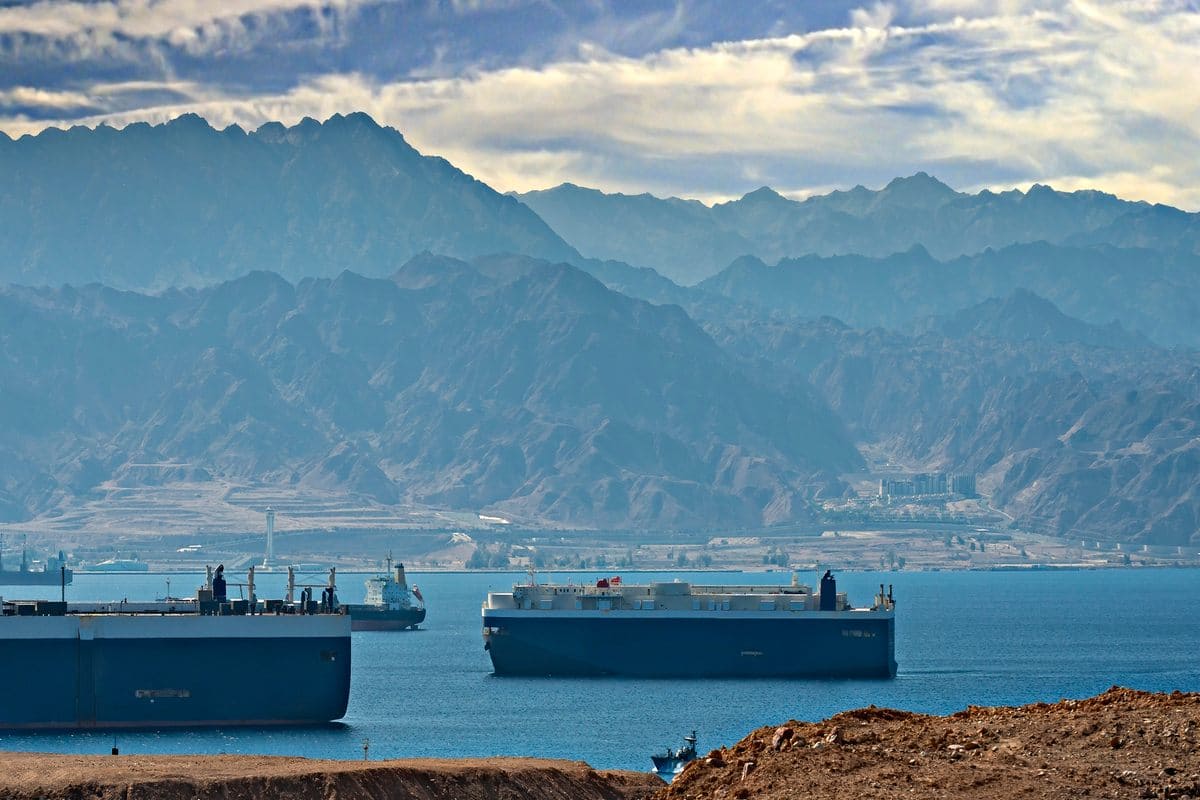
Bab el-Mandeb Strait under renewed pressure as shipping risks escalate
The Iran-backed Houthi movement in Yemen announced on 20 July a naval embargo targeting Saudi Arabia in the Bab el-Mandeb Strait, the strategic gateway to the Red Sea. The announcement comes at a time when the crisis in the Strait of Hormuz has already disrupted maritime traffic. Any simultaneous disruption to both strategic waterways could quickly trigger severe regional and global consequences, driving energy prices higher once again.
More tankers change course in the Red Sea
According to vessel tracking data reported by Reuters, on 22 July four additional oil tankers altered their planned routes in the Red Sea following Houthi warnings advising ships not to sail toward Saudi Arabian ports. Two of the vessels reportedly updated their destination to the Suez Canal. On the same day, a fifth vessel carrying vehicles also reversed course in the Gulf of Aden.
A day earlier, three tankers transporting Saudi crude oil to China and India performed U-turns in the Red Sea, choosing to head toward the Suez Canal instead of following the usual route along Yemen’s coastline as a precautionary measure.
Iran raises the stakes ahead of talks with the United States
Reuters also reported that Iran has received a proposal for a 10-day ceasefire. The announcement of the naval embargo effectively reopens tensions between the Houthis and Saudi Arabia. It is also widely interpreted as a tactical move by Tehran to increase pressure ahead of negotiations with Washington, with the aim of preserving the provisional memorandum signed in June.
The Houthis have repeatedly employed similar tactics. Shortly after the 7 October 2023 attacks and the outbreak of the Gaza war, the group announced it would target vessels linked to Israel transiting through the Red Sea. Until the ceasefire reached with the United States in May 2025, Yemeni militants had attacked more than one hundred commercial vessels.
Bab el-Mandeb Strait remains vulnerable despite limited blockade capability
Several analysts believe the Houthis lack the military capability to completely shut down the Bab el-Mandeb Strait, while any attempt to do so could trigger an unpredictable escalation of the regional conflict.
Instead, Tehran’s strategy appears to focus on creating sufficient uncertainty to push up crude oil and refined fuel prices. As demonstrated during the Hormuz crisis, even the threat of attacks can force shipping companies to reroute vessels, increasing insurance premiums and transportation costs. Should shipowners decide to divert around the Cape of Good Hope, shipping times would lengthen, supply chains would face additional disruption, and energy markets would come under renewed pressure.