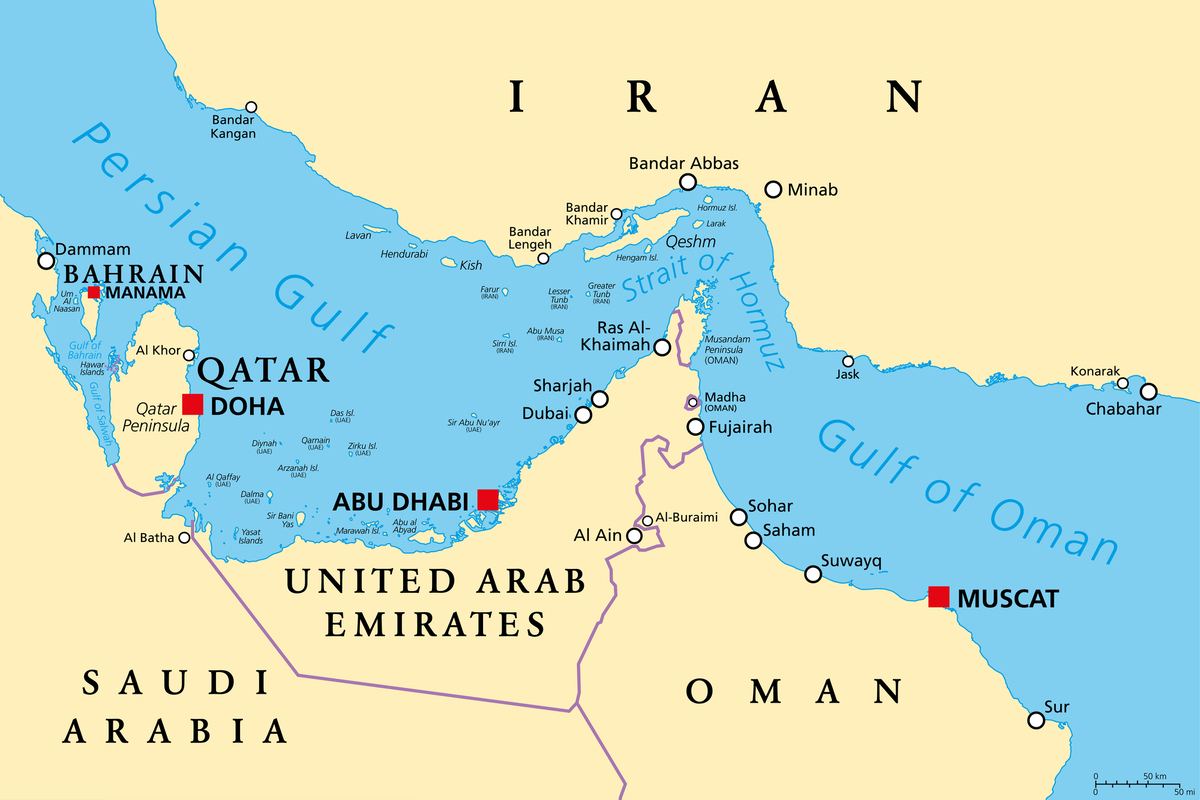
UAE accelerates Fujairah oil export capacity beyond Hormuz
The United Arab Emirates is moving to accelerate construction of a new oil pipeline aimed at doubling export capacity through the port of Fujairah by 2027, strengthening the country’s ability to bypass the Strait of Hormuz.
Abu Dhabi Crown Prince Sheikh Khaled bin Mohamed bin Zayed has instructed the Abu Dhabi National Oil Company (ADNOC) to speed up development of the East-West crude pipeline project. The infrastructure will allow larger volumes of crude oil to be redirected toward Fujairah, a strategic export hub on the Gulf of Oman, avoiding transit through Hormuz. The pipeline is currently under construction and operations are expected to begin next year.
Fujairah oil exports already rely on the ADCOP pipeline
The UAE already operates another key export route, the ADCOP/Habshan-Fujairah pipeline, which has been operational since 2012 and stretches approximately 380-406 km. The infrastructure connects Abu Dhabi’s onshore oil fields to Fujairah and has repeatedly served as an alternative route during periods of heightened regional instability.
The Abu Dhabi Crude Oil Pipeline (ADCOP) remains the country’s main strategic corridor to bypass Hormuz. The system links inland production facilities in Habshan with the Fujairah export terminal on the Gulf of Oman. With a nominal capacity of nearly 1.5 million barrels per day, ADCOP has become increasingly critical since hostilities escalated at the end of February.
According to an analysis by Kpler, ADCOP handled around 30% of UAE crude exports in 2025, a share that surged to 80% in April 2026. Shipments from the Fujairah terminal reached 1.82 million barrels per day during that month, indicating that the system is operating at, and potentially above, its effective capacity.
Fujairah oil exports strengthen UAE energy security
Accelerating construction of a second pipeline would significantly expand the UAE’s export flexibility. The project could raise total pipeline capacity toward Fujairah to nearly 3.3 million barrels per day, while total export capacity from the port itself could increase to 4 million barrels per day.
Such expansion would allow the Emirates to export almost all internationally traded crude volumes without crossing Hormuz, while also preserving room for future production growth.
ADNOC has repeatedly stated its ambition to “meet global energy demand,” and the UAE increasingly appears focused on reducing strategic dependence on regional oil producers. In this context, Abu Dhabi’s decision to withdraw from both OPEC and OPEC+ becomes more understandable.
“The United Arab Emirates’ decision to withdraw from OPEC and OPEC+ was a sovereign and strategic choice based on a comprehensive assessment of its production policy and future capabilities,” UAE Energy Minister Suhail Al Mazrouei said in a post published on X during the weekend.
Mazrouei added that the decision was not politically motivated and did not reflect divisions between the UAE and its regional partners.
Regional tensions increase pressure on UAE energy infrastructure
From a geopolitical perspective, a second pipeline would partially reduce Tehran’s leverage over the Strait of Hormuz and limit the possibility of using the maritime corridor as a pressure tool against the UAE.
The move would not eliminate risk entirely, as Fujairah itself remains exposed to potential attacks, as previous incidents have shown. However, additional infrastructure redundancy could reduce the country’s overall vulnerability.
Drone incident near the Barakah nuclear plant raises concerns
According to UAE authorities, a fire that broke out on Sunday, May 17, near the Barakah Nuclear Power Plant, the region’s only nuclear power facility, may have been caused by a drone launched by Iran or one of its proxy groups.
The UAE described the incident as a “dangerous escalation.” The fire reportedly occurred outside the plant perimeter and caused no injuries or nuclear alarms. The country’s nuclear regulatory authority stated that there had been no radioactive leak and no threat to public safety.
The UAE Ministry of Defence said that three drones targeted the country on the same day. Two were intercepted, while the third struck the outer perimeter of the Barakah facility, prompting military authorities to declare a state of maximum alert.
No group has claimed responsibility for the attacks so far. However, even before this latest incident, Abu Dhabi had accused Iran of targeting Emirati energy infrastructure. Other regional countries, including Saudi Arabia and Oman, condemned the attack, while Rafael Mariano Grossi, Director General of the International Atomic Energy Agency, expressed “grave concern” over the incident.