Why the Hormuz Strait reopening remains highly uncertain
“Ships of the world, start your engines. Let the oil flow.” With these words posted on Truth Social last Sunday, US President Donald Trump announced the agreement between the United States and Iran, declaring the reopening of the Strait of Hormuz.
Under the memorandum of understanding, expected to be signed on Friday, Washington and Tehran have committed to reopening the waterway and restoring maritime traffic, which has been largely disrupted since late February. However, returning traffic to pre-war levels, assuming it happens at all, will not be easy. Multiple technical, logistical and political obstacles remain. Prediction market Kalshi currently assigns a 51% probability that traffic will return to normal before August 1 and a 68% probability before September 1.
Is the Hormuz Strait reopening actually underway?
According to Kpler, a leading intelligence and analytics company, there has been no meaningful increase in activity through the Strait of Hormuz so far. Shipping volumes remain well below normal commercial levels despite the diplomatic progress announced by both sides.
As of June 15, only five confirmed transits had reportedly taken place. Several operational issues remain unresolved, including transit security, navigation charges and the practical arrangements required to ensure safe passage. No new attacks on vessels have been reported since June 10, suggesting conditions have stabilized. Nevertheless, the limited number of transits indicates that shipping companies are still waiting for clearer guarantees before resuming normal operations.
Mine clearance remains the biggest challenge
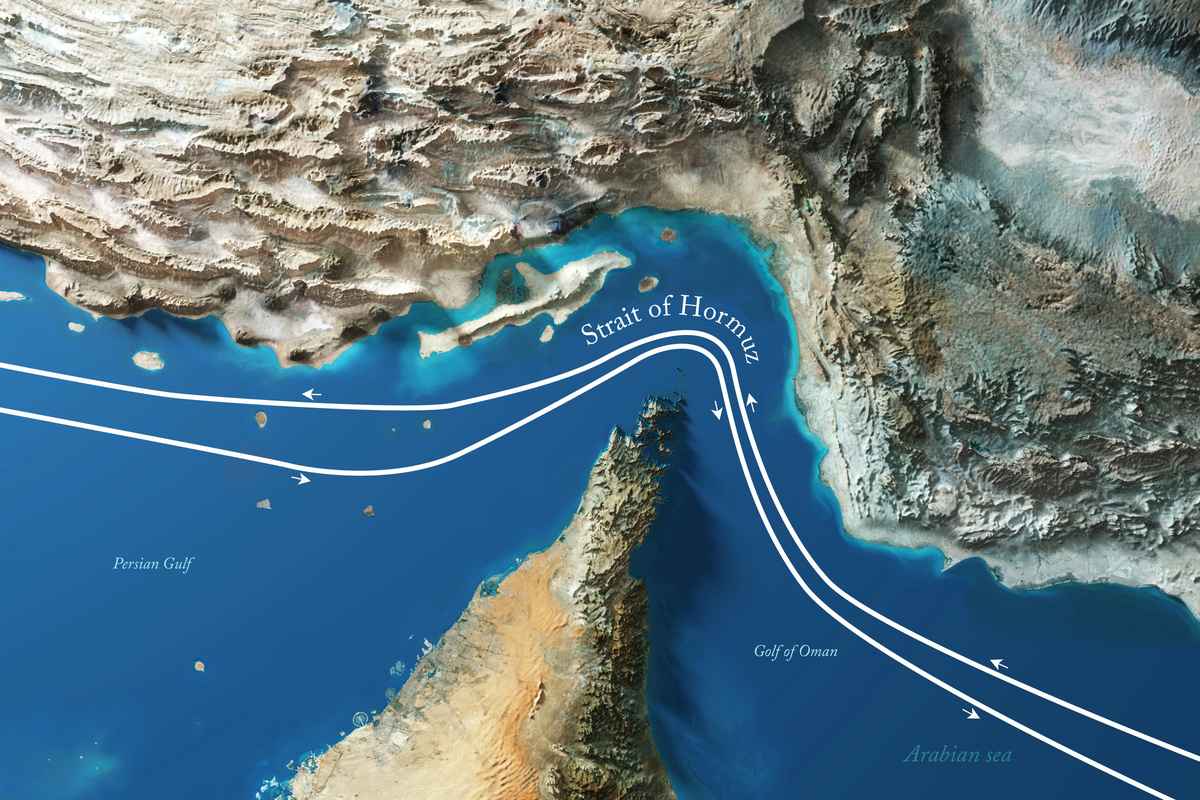
Iran is believed to have deployed naval mines along the main shipping channel of Hormuz, located between Iran to the north and the United Arab Emirates and Oman to the south.
The Joint Maritime Information Center and Oman’s Maritime Security Center have issued multiple warnings regarding floating objects suspected to be mines. US Secretary of State Marco Rubio also told the Senate that Iran had laid mines across large sections of the strait.
Removing these mines is considered essential to restoring maritime traffic to pre-conflict levels. However, experts estimate that mine clearance operations could take anywhere from several weeks to as long as six months.
Significant uncertainties remain over who would lead such an effort and how mine-clearing vessels would be protected. Tehran has already stated that it cannot accurately identify all the mines it deployed and lacks the capability to remove them. The United Kingdom and France have sent naval assets to the region to support potential demining operations, while Japan has also expressed its willingness to participate.
Historical precedents highlight the complexity of such missions. During the Tanker War of the 1980s, part of the broader Iran-Iraq conflict, both countries mined the Persian Gulf as a deterrence strategy, prompting US escort operations. During the First Gulf War, Iraq again mined Gulf waters, leading to an international mine-clearing effort involving eight countries.
The dispute over tolls in the Strait of Hormuz
The Strait of Hormuz is a natural waterway that includes the territorial waters of both Iran and Oman. Historically, vessels have been free to transit without paying tolls. Before the conflict that began in February, no official fees were charged.
However, some Asian shipping companies and smaller operators reportedly made unofficial payments to Iran for safe passage. The Institute for the Study of War (ISW) described the practice as a form of protection racket.
The issue remains unresolved. On Sunday, Trump stated that the Strait of Hormuz would reopen and remain “permanently toll-free.” Yet the following day, Iranian officials suggested that transit fees could be introduced in exchange for unspecified services.
Iranian news agency Fars reported that, under the new agreement with the United States, the strait would be managed by Iran in coordination with Oman, including the possibility of imposing “service charges.” Unlike the Suez Canal and Panama Canal, which charge fees to recover the costs of constructing and maintaining artificial waterways, Hormuz is a natural maritime passage.
Throughout the conflict, Iran sought to strengthen its sovereignty claims over the strait by creating the Persian Gulf Strait Authority, an entity intended to oversee safe-passage permits. The move was strongly criticized by the International Maritime Organization. IMO Secretary-General Arsenio Dominguez described any attempt to impose transit tolls as incompatible with international law.
Dimitris Ampatzidis of Kpler highlighted the practical difficulties in comments to Bloomberg: “Who will enforce this system? How will it be implemented? How will tolls be collected? And what do the other Gulf states think about it?”
Commercial shipping is likely to recover gradually
Some of these questions may be addressed during the negotiations between Iran and the United States that are expected to begin after the signing of the memorandum of understanding on Friday.
For now, however, there is no guarantee that Tehran will allow vessels to pass through the Strait of Hormuz as freely as they did before the conflict. “The key point is that the commercial shipping system will most likely normalize gradually,” Ampatzidis said.
Moreover, if negotiations break down again, Iran could resume attacks on commercial vessels, as occurred during previous phases of the conflict. As a result, the Hormuz Strait reopening is likely to be a slow and fragile process rather than an immediate return to normality.