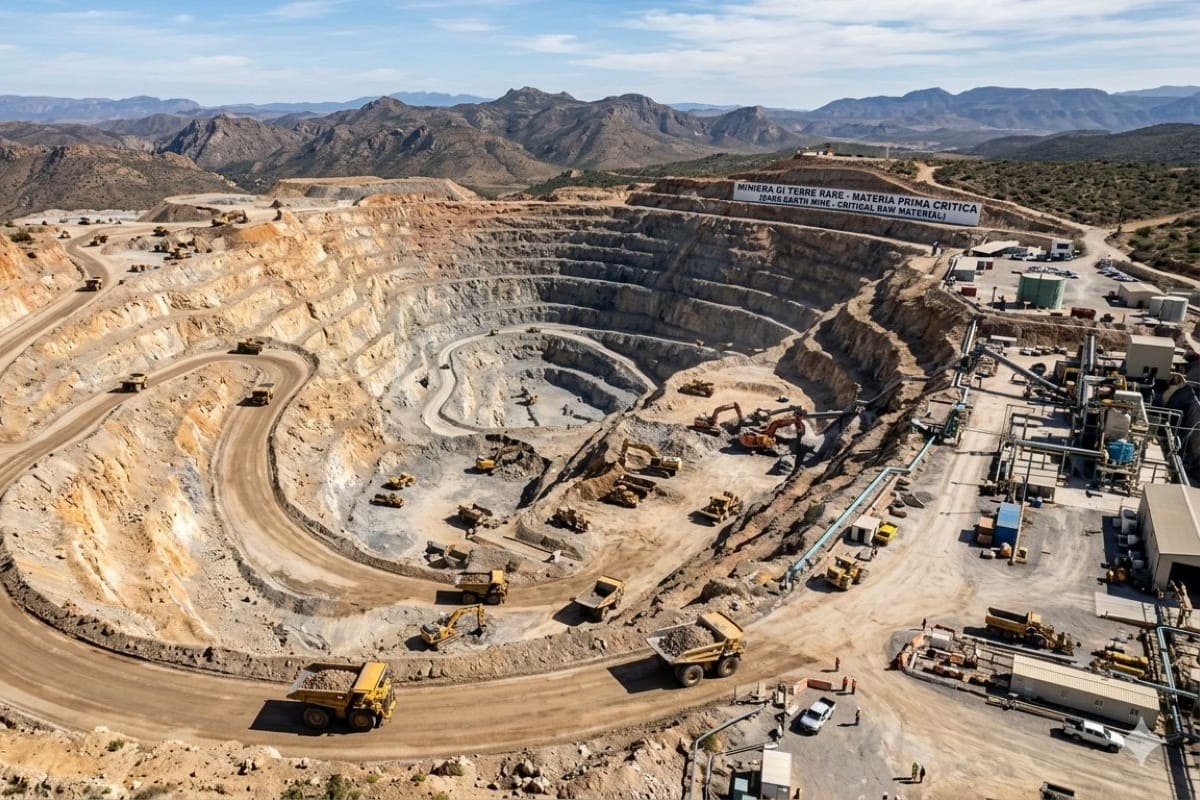
Rare earth demand rises amid growing supply constraints
Rare earth demand is becoming a critical pressure point for the global economy. According to a new report by the International Energy Agency, these materials are among the most strategic critical minerals for global industrial supply chains, yet supply remains highly concentrated and slow to diversify.
The agency highlights a widening gap between the rapid expansion in the use of rare earths and the limited progress in securing alternative sources, creating tangible risks for global markets.
Strategic role of rare earth elements in advanced industries
The 17 elements that make up rare earths are now essential across multiple industrial applications. They are widely used in electric vehicles, artificial intelligence data centers, robotics and defense systems. Their importance has surged in recent years, particularly due to their role in high-performance permanent magnets, key components in many advanced technologies.
According to the International Energy Agency, rare earth demand for magnets has doubled since 2015 and is expected to grow by more than 30% by 2030. This upward trajectory is likely to continue beyond the decade, driven by accelerating digitalization and automation.
Production remains highly concentrated in a few countries
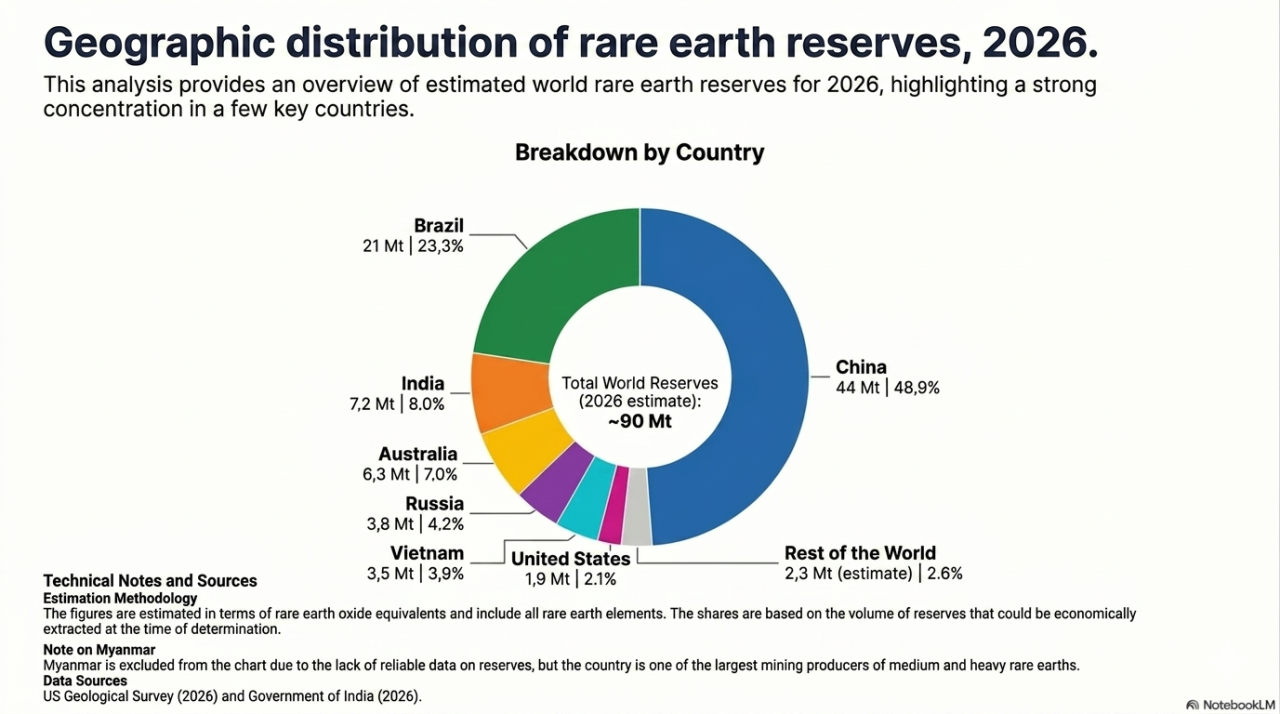
One of the most critical issues is the strong geographic concentration of the supply chain. Rare earths are among the most concentrated critical materials across all stages of the value chain, from mining to refining and magnet manufacturing.
China currently accounts for around 60% of global rare earth production for magnets. Its dominance becomes even more pronounced in refining, where it exceeds 90%, and in permanent magnet production, where it reaches approximately 95%.
This level of concentration represents a systemic risk. Two decades ago, China’s share in magnet production was around 50%, highlighting a progressive centralization of the supply chain over time.
The report warns that such dependence exposes global industries to significant vulnerabilities. “Rare earth supply chains remain among the most concentrated of all critical minerals,” said Fatih Birol. “Recent disruptions have shown how quickly these vulnerabilities can translate into real economic risks.”
Export controls highlight fragility of supply chains
The risks are not theoretical. In 2025, export controls introduced by China caused significant short-term disruptions. Some manufacturers outside the country struggled to secure essential raw materials and, in several cases, were forced to scale back production.
Although trade flows later stabilized, the episode exposed the fragility of supply chains. According to the International Energy Agency, in a scenario of fully enforced restrictions, up to $6.5 trillion in economic activity outside China could be at risk each year.
The most exposed sectors include automotive, electronics and transport, all heavily dependent on permanent magnets and therefore on rare earths.
Supply diversification remains insufficient
Despite growing awareness, progress in diversifying supply remains limited. Projects currently under development outside the dominant supplier are not sufficient to meet projected demand.
By 2035, existing and planned capacities are expected to cover only about:
- 50% of mining needs
- 25% of refining demand
- less than 20% of magnet demand
The imbalance is even more pronounced in the downstream segment. Magnet production projects represent only about one-third of expected mining capacity, highlighting a major disconnect between extraction and industrial processing.
The result is a widening gap between supply and demand, which is set to grow unless investments accelerate.
Investment needs to secure rare earth supply chains
To close this gap, the International Energy Agency estimates that around $60 billion in investment will be required over the next decade. Funding must be directed across the entire value chain, with particular focus on refining and magnet production, currently the main bottlenecks.
Despite its scale, this investment is considered relatively modest compared to the potential economic damage caused by supply disruptions.
However, the challenge goes beyond financing. Structural barriers related to technology, equipment, expertise and industrial capabilities continue to limit the development of competitive supply chains outside dominant regions.
Recycling and innovation as strategic levers
Alongside industrial investment, the report identifies recycling and innovation as key levers to reduce pressure on primary resources.
Recycling could cut raw material demand by up to 35% by 2050. At the same time, the development of alternative technologies and substitute materials could reduce dependence on the most critical elements.
However, these solutions alone are not sufficient. They must be integrated into a broader strategy combining industrial policy, international cooperation and more transparent market mechanisms.
International cooperation remains essential for critical minerals
The global nature of critical minerals makes it unrealistic for countries to build fully independent supply chains. Resources, expertise and industrial demand are unevenly distributed worldwide.
For this reason, the report stresses the need for coordinated international action. Only stronger cooperation between countries will enable aligned investments, project support and the development of more resilient supply chains.
The International Energy Agency outlines several priority actions, including strengthening emergency preparedness, increasing investment in critical stages of the value chain, accelerating innovation and improving price transparency.