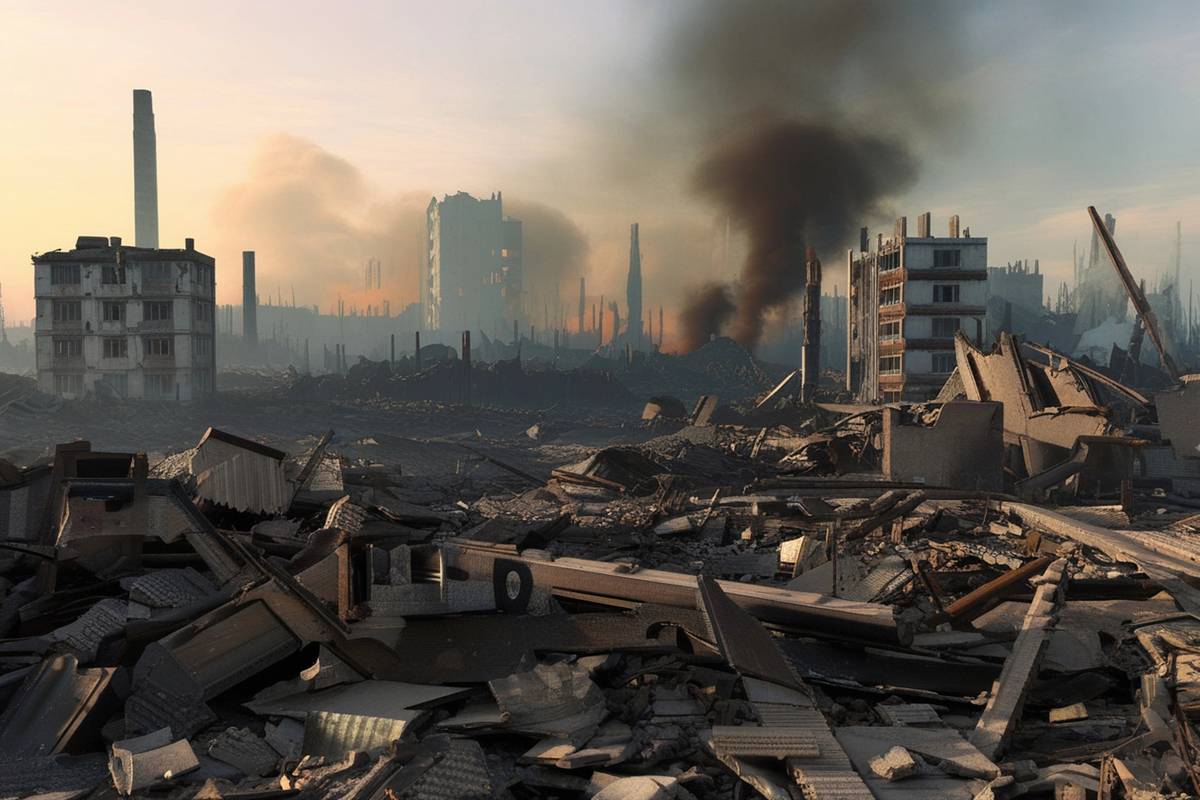
The environmental toll of war pollution
The toll of two weeks of war in Iran for CO2 emissions is over 5 million tons, which, projected over a year, would equate to almost 131 million, a figure comparable to the total sum produced by 84 countries (the lowest-ranking in terms of polluting emissions). The Climate and Community Institute (CCI) think tank has calculated the impact of war pollution during the first 14 days of the conflict between Israel and the US and the Islamic Republic, warning that military operations could cause $1.3 billion in climate damages.
Military attacks by the United States and Israel continue to kill thousands and cause displacement throughout the Middle East. Initial estimates indicate that the financial costs of the conflict for the United States could amount to almost $16.5 billion. However, the severe environmental damage caused by bombings targeting oil refineries, desalination plants, and military facilities could double, if not triple, in the next ten days.
Two weeks of war in Iran produced more carbon pollution than Iceland’s annual output
According to the analysis by the Climate and Community Institute think tank, from February 28 to March 14, the war caused 5,054,000 tons of carbon dioxide, a figure exceeding Iceland’s total carbon pollution for 2024. The CO2 emissions from two weeks of conflict are equivalent to those resulting from the use of 1.1 million gasoline cars for an entire year.
The analysis focuses on direct and indirect emissions across five impact categories:
- Emissions embodied in munitions: the carbon embodied in the production of missiles and drones used by the United States, Israel, Iran, and other countries in the region affected by the conflict.
- Fuel for military operations: the estimate of total emissions from fuel used by fighter jets and equipment, and that employed for support operations (troop transport, in-flight refueling of jets, and naval unit movements).
- Destroyed fuel: fuel that went up in flames due to the bombing of storage depots, refineries, and oil tankers.
- Loss of military assets: destroyed or damaged fighter jets, ships, and other military vehicles.
- Infrastructure reconstruction: emissions from the destruction of homes, schools, and other civilian infrastructure that will require total or partial rebuilding.
Carbon emissions from February 28 to March 14, 2026
The data highlights a massive impact. The total figure therefore reflects both the impact of direct warfare and the emissions resulting from the systematic destruction of civilian and energy infrastructure.
| Activity | Total emissions (tCO2e) |
|---|---|
| Destroyed homes and buildings | 2,415,000 |
| Destroyed fuel | 1,883,000 |
| Fuel used (operations and support) | 529,000 |
| Carbon embodied in equipment | 172,000 |
| Missiles and drones | 55,000 |
| TOTAL | 5,054,000 |
The burden of reconstruction
The emissions generated during debris removal and subsequent reconstruction constitute the primary cause of war pollution. Rebuilding homes, roads, hospitals, schools, and energy facilities and other infrastructure in the affected region, which encompasses 14 states from Cyprus to Azerbaijan, will be a very costly and carbon-intensive operation. The same think tank has estimated that reconstruction in Gaza and Lebanon will produce at least 24 times more emissions than those generated during the conflict phase alone.
Rising carbon costs
According to the think tank’s estimates, the carbon costs of war will continue to rise drastically as the conflict prolongs. The reasons are diverse but in some ways obvious. Firstly, due to the need to replenish arsenals: an increase in embodied emissions from the production of new weapons and the fuel required to transport them to the region is anticipated. Furthermore, continued targeting of energy infrastructure is causing a massive release of emissions due to the uncontrolled combustion of fossil fuels, much like what occurred during the Gulf War.