Energy transition and energy security: renewables are reshaping global resilience
The world is no longer in the 1970s. Today, countries have a much broader range of solutions to reduce their exposure to energy price shocks. Over the past decades, the cost of wind and solar power has fallen sharply, making both technologies increasingly competitive with fossil fuels. Even before the conflict in the Middle East triggered by the military intervention of the United States and Israel, renewable energy had already proven to be an effective tool for strengthening energy security. This is one of the key findings of the Statistical Review of World Energy 2026.
An earlier analysis by Ember found that the wind and solar capacity installed following Russia’s invasion of Ukraine avoided €72 billion in fossil fuel imports between 2022 and 2025. Germany, Spain and Italy recorded the largest savings.
Europe accelerated renewable deployment after the energy crisis
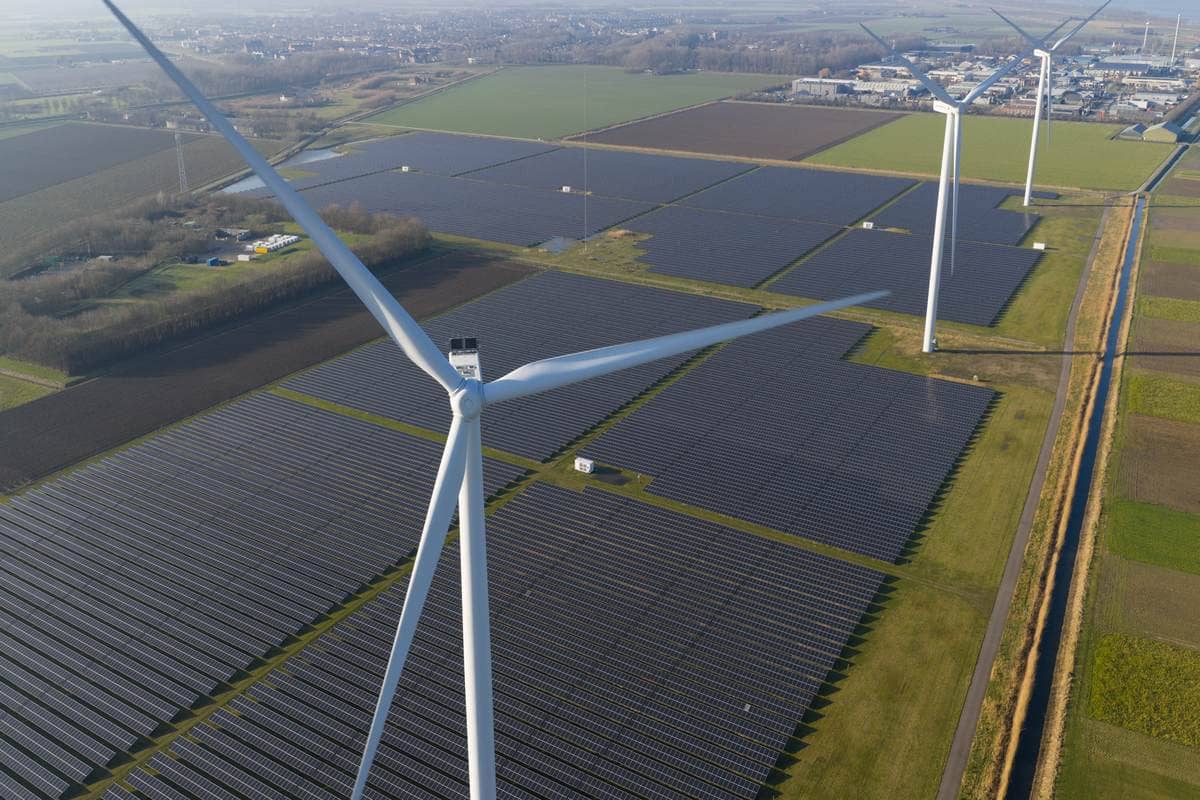
Following Russia’s invasion of Ukraine, the European Union stepped up efforts to expand renewable energy capacity. The results have been rapid. Wind and solar supplied 30% of the EU’s electricity in 2025, up from 19% in 2021. This growth displaced fossil generation, with gas-fired electricity falling by 15% and coal generation by 38% over the same period.
Supported by the rapid deployment of wind and solar, together with initiatives such as the REPowerEU plan, these two renewable sources generated 852 TWh by 2025, surpassing the combined electricity output from coal, gas and oil, which totalled 760 TWh.
The rapid expansion of renewable energy has helped shield Europe from higher costs associated with imported fossil fuels. Beyond the European Union, small-scale solar photovoltaic systems have also enabled households and businesses to respond directly to rising energy prices. Thanks to relatively low installation costs and straightforward deployment, solar PV has become widely accessible, driving significant changes in electricity systems within a very short period. Similar distributed solar solutions are also becoming increasingly relevant across parts of Sub-Saharan Africa, where energy security and affordable electricity remain major priorities.
How the oil shocks of the 1970s transformed global energy systems
The recent hostilities in the Middle East effectively closed the Strait of Hormuz, disrupting oil and gas exports from the Persian Gulf. Four years earlier, Russia’s invasion of Ukraine had already severely affected natural gas flows into Europe. These crises once again highlighted the close relationship between energy and geopolitics. Yet such disruptions are not unprecedented.
At a time of heightened uncertainty, the Statistical Review of World Energy published by the Energy Institute offers valuable historical perspective on the profound impact of the two oil shocks of the 1970s, events that ultimately accelerated energy diversification.
Before those crises, international oil trade, refining and marketing across Europe and North America were dominated by the “Seven Sisters“: Anglo-Persian Oil (BP), Gulf Oil, Royal Dutch Shell, the Standard Oil companies of California, New Jersey and New York, later becoming Chevron, Esso/Exxon and Mobil, together with Texaco. These companies negotiated long-term oil prices with exporting governments. The situation changed dramatically in October 1973, when the Organization of the Petroleum Exporting Countries (OPEC) took control of pricing.
Following the Yom Kippur War in 1973, OPEC, which controlled around half of global oil production, imposed an embargo on major oil-consuming countries, including the United States and Japan, while sharply increasing prices. In 1979, the Islamic Revolution in Iran disrupted supply once again, triggering another surge in oil prices. By 1980, crude oil prices had risen tenfold compared with the beginning of the decade.
The consequences were profound. Global oil demand growth slowed from an average annual rate of 7.8% before 1973 to 2.2% after the first oil shock, before falling again after 1979. It took a decade for global oil consumption to recover to 1979 levels. In Europe and Japan, demand never exceeded those levels again, while the United States and Canada required around 20 years to recover.
The response from importing countries was clear: diversification. To strengthen energy sovereignty, governments invested in alternative energy sources such as coal and natural gas, reducing their dependence on oil. Even in China, sustained growth in oil consumption resumed only after 2000. Initial policy measures focused primarily on reducing demand. By 1980, the energy intensity of GDP had fallen by 3.3%, driven by behavioural changes and lower energy consumption.
Fatih Birol: the Hormuz crisis could redraw the global energy map
The 2026 crisis could reshape the global energy landscape over the coming years, as the disruption in the Strait of Hormuz forces countries to rethink energy security, trade routes and international partnerships. This is the view of International Energy Agency (IEA) Executive Director Fatih Birol.
“Regardless of how the Hormuz issue is resolved, I believe the global energy map will begin to be redrawn over the next two or three years. Partnerships will be redefined. New collaborations will emerge,” Birol said during a TÜSİAD meeting in Istanbul.
Birol noted that, until four years ago, the global economy and the world’s energy system relied on two major strategic arteries: the pipelines carrying energy from western Siberia to Europe and the Strait of Hormuz. Today, both are effectively closed.
He also stressed that growing concerns over energy security will provide further momentum for investment in renewable energy, nuclear power and battery storage technologies. These trends are expected to influence energy strategies not only in Europe, but also in emerging markets, including African economies seeking to strengthen energy independence while expanding access to reliable electricity.
